MAI-Thinking-1 · MAI-Code-1-Flash · Surface RTX Spark Dev Box · Azure Foundry · Benchmark reality check
Summary: At Build 2026, Microsoft unveiled seven in-house MAI models. Flagship reasoning model MAI-Thinking-1 benchmarks closer to Claude Sonnet 4.6 than to the Opus-tier marketing — MAI-Code-1-Flash is already live in GitHub Copilot; the Surface RTX Spark Dev Box arrives in the US this fall with enough local compute for 120B+ parameter models. Microsoft is signaling independence from OpenAI, but the self-built AI stack is still early. This guide covers every key point: background → seven models → hardware → catch-up analysis → developer access → FAQ.
For seven years, Microsoft poured more than $130 billion into OpenAI. GPT models on Azure became the backbone of its AI strategy. That deep dependency created three structural risks:
Runaway API costs — every call routes revenue to OpenAI; scale thins margins
No technical sovereignty — no control over iteration pace, training data, or weight ownership
Contract constraints — the original deal explicitly limited how large a model Microsoft could train on its own
The turning point came in late 2025. A renegotiated agreement removed model-size caps and explicitly allowed Microsoft to pursue superintelligence independently. Microsoft AI chief Mustafa Suleyman put it this way:
"We only formally gained freedom from the OpenAI contract about six months ago — permission to pursue superintelligence with our own IP, our own data, and our own compute. This is a very early beginning."
Build 2026 was Microsoft's first public showcase of what that freedom produced.
| Model | Capability | Status |
|---|---|---|
| MAI-Thinking-1 | Reasoning / coding flagship | Private preview |
| MAI-Image-2.5 | Text-to-image + image-to-image | Generally available |
| MAI-Image-2.5 Flash | Faster, cheaper image generation | Generally available |
| MAI-Transcribe-1.5 | Speech-to-text, 43 languages | Generally available |
| MAI-Voice-2 | Multilingual TTS + voice cloning | Generally available |
| MAI-Code-1-Flash | GitHub Copilot / VS Code coding | Generally available |
| MAI-Code-1 | Full coding model | Generally available |
One-line positioning: Microsoft's first reasoning model, aimed at enterprise coding and math — cost efficiency first.
| Spec | Value |
|---|---|
| Architecture | Sparse MoE (Mixture of Experts) |
| Active parameters | 35B (only this subset activates at inference) |
| Total parameters | ~1T (trillion) |
| Context window | 256K tokens |
| Training | Pre-trained from scratch, no third-party distillation |
| Data | Enterprise-grade clean data, commercially licensed, traceable |
| Current status | Azure Foundry private preview (apply for access) |
Sparse MoE matters because inference activates only 35B parameters — far less than dense giants like GPT-5.5 or Claude Opus — which means significantly lower inference cost. That is the model's sharpest differentiator.
| Benchmark | MAI-Thinking-1 | Notes |
|---|---|---|
| SWE-Bench Pro | 52.8% | Microsoft claims "competitive with Claude Opus 4.6" (see analysis below) |
| SWE-Bench Verified | 73.5% | — |
| AIME 2025 | 97.0% | Competition math |
| AIME 2026 | 94.5% | Fresh problems to reduce memorization |
| LiveCodeBench v6 | 87.7% | Live coding problems |
| Human blind test (vs Claude Sonnet 4.6) | Wins | 1,276 tasks, Surge independent eval |
The keynote emphasized "competitive with Claude Opus 4.6." Read the fine print before you buy the narrative:
The technical report says "competitive with Sonnet 4.6 across a wide range of benchmarks" — Sonnet is Anthropic's mid-tier model, not flagship Opus
The comparison baseline is stale: today's Anthropic flagship is Claude Opus 4.8 at SWE-Bench Pro 69.2%. Microsoft compared against Opus 4.6 (53.4%) — two generations back
GPT-5.5 scores 58.6% on SWE-Bench Pro — also ahead of MAI-Thinking-1
Bottom line: MAI-Thinking-1 is a credible mid-tier reasoning model with strong cost efficiency, but absolute performance still trails current Anthropic and OpenAI flagships.
One-line positioning: Microsoft's first model supporting both text-to-image and image-to-image. Ranks #2 on Arena.ai's image editing leaderboard.
| Version | Input type | Price |
|---|---|---|
| Standard | Text input | $5 / 1M tokens |
| Image input | $8 / 1M tokens | |
| Image output | $47 / 1M tokens | |
| Flash | Text + image input | $1.75 / 1M tokens |
| Image output | $33 / 1M tokens |
One-line positioning: Speech transcription across 43 languages. #1 on FLEURS. More than 5× faster than leading competitors.
| Metric | MAI-Transcribe-1.5 |
|---|---|
| Languages supported | 43 (with auto language detection) |
| FLEURS average WER | 4.9% (among the lowest in the industry) |
| Artificial Analysis WER | 2.4% (3rd overall) |
| Processing speed | 276× realtime (one hour of audio in seconds) |
| Latency improvement | 5.7× faster than v1.4 |
| Standout feature | Contextual Biasing (keyword boosting) |
| Pricing | $0.36 / audio hour |
On the FLEURS 43-language benchmark, it beats Scribe V2, Whisper-large-V3, GPT-4o-Transcribe, and Gemini 3.1 Flash. Typical use cases: Teams meeting notes, contact-center transcription, GitHub Copilot voice input, accessibility tooling.
One-line positioning: Multilingual text-to-speech with voice cloning. Adds 15+ languages and emotional style control.
One-line positioning: Inference-efficient coding models optimized for GitHub Copilot and VS Code — live today.
FrontierNews.ai noted that among the seven MAI models, MAI-Code-1-Flash may have the most immediate impact on developers — no private preview waitlist. It is already running inside your VS Code session.
Satya Nadella called it a "dream machine" — this is not a typical mini PC.
| Spec | Detail |
|---|---|
| Core chip | NVIDIA RTX Spark (Blackwell GPU + Grace CPU) |
| Unified memory | 128GB (CPU + GPU shared, zero-copy) |
| AI compute | 1 Petaflop (1,000 TFLOPS) |
| Power draw | 100W TDP |
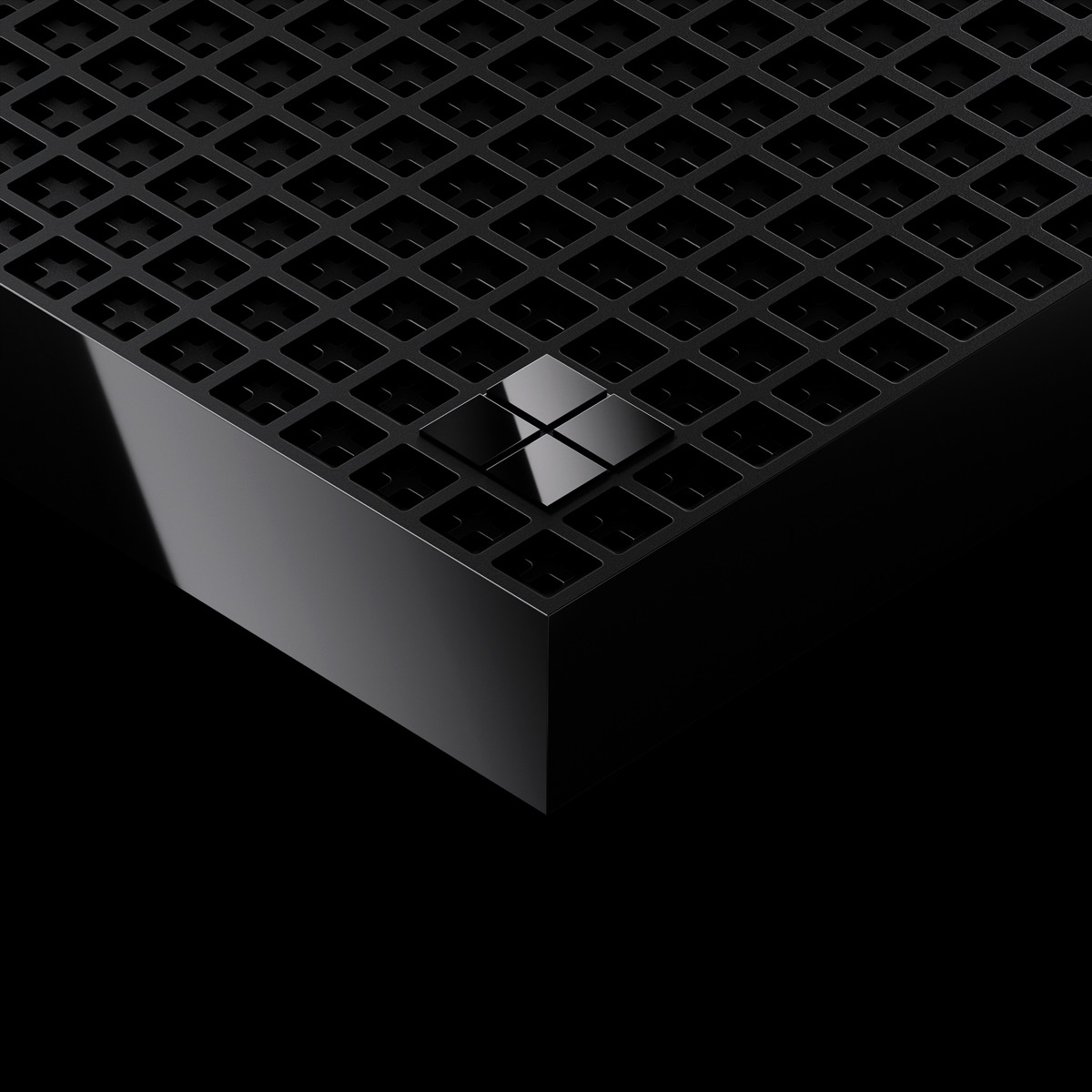
| Chassis | Anodized aluminum, 3D-printed, 1,000 ventilation holes |
| OS | Windows 11 Pro (developer pre-config image) |
WSL 2 (GPU passthrough + CUDA), VS Code + GitHub Copilot, PowerShell 7, Python, Node.js, Git, NVIDIA CUDA/cuDNN, AI Toolkit for VS Code, Windows ML, Microsoft Foundry CLI.
Availability: US launch first, Microsoft.com only, fall 2026, price not yet announced (consumer purchases allowed). The thesis is simple — move cloud AI compute to the desk and challenge pay-per-token economics.
Mustafa Suleyman said at Build 2026:
"The goal is to prove we can be one of the world's top four AI labs. We're not there yet — but that's why I came to Microsoft. I want to build the best frontier models globally, fully multimodal, from scratch."
The current "big three" are widely considered Google DeepMind, OpenAI, and Anthropic.
| Area | Assessment |
|---|---|
| Independent training | MAI-Thinking-1 trained from scratch with no distillation |
| Multimodal coverage | Text, image, speech, transcription, and coding all covered |
| Enterprise data security | Commercially licensed data, controllable weights, Azure data residency |
| Cost competitiveness | Microsoft claims up to 10× lower cost than GPT-5.5 on equivalent tasks |
| Distribution channels | GitHub Copilot (tens of millions of developers), M365, Teams |
| MAI-Code-1-Flash | Live and already in developer workflows |
| Area | Current state |
|---|---|
| SWE-Bench Pro flagship performance | MAI-Thinking-1 (52.8%) vs Opus 4.8 (69.2%) — ~16-point gap |
| Model iteration speed | Anthropic is at Opus 4.8, OpenAI at GPT-5.6; Microsoft's first generation just shipped |
| Training infrastructure | Custom compute still ramping; behind Google TPU and large NVIDIA H100 clusters |
| Tooling ecosystem maturity | Claude Code and OpenAI Codex have deeper agent stacks |
| MAI-Thinking-1 access | Still private preview — most developers cannot use it yet |
| Dimension | Microsoft MAI | OpenAI GPT-5.6 Sol | Anthropic Claude Opus 4.8 |
|---|---|---|---|
| SWE-Bench Pro | 52.8% | ~58.6% (GPT-5.5) | 69.2% |
| Inference cost | Low (MoE) | Medium | Medium-high |
| Context window | 256K | 1M | 200K |
| Data transparency | High | Low | Low |
| Native Azure integration | Native | Via partnership | Via partnership |
| Developer ecosystem | Strong (GitHub, VS Code) | Very strong | Strong (Claude Code) |
| Local inference hardware | Dev Box (exclusive) | None | None |
| Availability today | Partially private preview | Fully available | Fully available |
When MAI-Code-1-Flash ships inside GitHub Copilot, 75 million developers touch Microsoft's models daily
When Surface RTX Spark Dev Box launches, Microsoft packages local AI sovereignty as a hardware product
When enterprises can fine-tune MAI inside Azure without data leaving the tenant, Microsoft owns the data flywheel
Short term (1–2 years): Pure benchmark leadership still belongs to OpenAI and Anthropic flagships. Medium term (3–5 years): Suleyman's "Hill-Climbing Machine" training stack should accelerate iteration. The deeper insight: this race may not be won by the highest leaderboard score, but by whoever controls more friction points in developer workflows, enterprise data sovereignty, and hardware.
| Model | Status | Access path |
|---|---|---|
| MAI-Thinking-1 | Private preview | microsoft.ai/models/mai-thinking-1 |
| MAI-Image-2.5 / Flash | Generally available | Azure Foundry Model Catalog |
| MAI-Transcribe-1.5 | Generally available | Azure Speech API |
| MAI-Voice-2 | Generally available | Azure Speech API |
| MAI-Code-1-Flash / MAI-Code-1 | Generally available | GitHub Copilot / VS Code / API |
import openai

client = openai.AzureOpenAI(
    azure_endpoint="https://<your-resource>.openai.azure.com/",
    api_key="<your-api-key>",
    api_version="2026-05-01"
)

response = client.chat.completions.create(
    model="mai-code-1-flash",
    messages=[
        {"role": "system", "content": "You are an expert software engineer."},
        {"role": "user", "content": "Refactor this Python function to use async/await: ..."}
    ],
    max_tokens=2048
)
print(response.choices[0].message.content)
For MAI-Thinking-1 private preview: open Microsoft Foundry, search Model Catalog for "MAI-Thinking-1," and apply for access. MAI models are also coming to OpenRouter, Fireworks AI, and Baseten (announced at Build 2026).
Confirm your Azure subscription and Foundry workspace permissions
Deploy MAI-Image / Transcribe / Voice / Code models from the Model Catalog
Update VS Code and GitHub Copilot to pick up MAI-Code-1-Flash
Apply for MAI-Thinking-1 private preview if you need the reasoning flagship
Validate Copilot inline suggestions and Azure portal settings in a macOS graphical session
It is in private preview on Azure Foundry. Apply for access through the Model Catalog. Public preview is expected within weeks.
Marketing compared it to Opus 4.6, but the technical report benchmarks against Sonnet 4.6. Current Opus 4.8 scores 69.2% on SWE-Bench Pro vs MAI-Thinking-1 at 52.8% — roughly a 16-point gap.
Pricing has not been announced. It is expected on Microsoft.com in the US in fall 2026. Consumer purchases will be supported.
MAI-Code-1-Flash, MAI-Image-2.5, MAI-Transcribe-1.5, and MAI-Voice-2 are generally available. MAI-Thinking-1 requires a private preview application.
Yes. Azure is a multi-model platform — the same Foundry workspace can call both MAI models and GPT-5.6.
MAI-Code-1-Flash is already a backend model in GitHub Copilot — especially for CLI and VS Code inline suggestions. No configuration change is required.
Data ownership. Fine-tuning data sent to OpenAI APIs may be used for model improvement under some terms. MAI fine-tuning on Azure is designed to keep data inside your environment — critical for finance, healthcare, and legal workloads.
The MAI family marks a strategic pivot from deep OpenAI dependency toward build-and-distribute: MAI-Thinking-1 differentiates on cost and data compliance, but flagship benchmarks still trail by a generation; MAI-Code-1-Flash already reaches tens of millions of developers through Copilot; Surface RTX Spark Dev Box turns local 120B+ inference into a purchasable hardware story.
Validating MAI-Code-1-Flash and Azure Foundry setup often requires a macOS graphical session — VS Code, Copilot authorization flows, and portal configuration are hard to fully reproduce from a Windows or Linux-only daily driver. Waiting for the Dev Box this fall or buying a Mac outright carries depreciation risk. Renting a remote Mac lets you verify Copilot and Foundry in a VNC desktop, then decide whether local hardware is worth the investment. If you are evaluating MAI integration and agent workflows, VNCMac offers hourly Mac mini rentals with full graphical access. See Mac rental plans.
Data current as of July 14, 2026. Verify official docs before purchasing decisions.