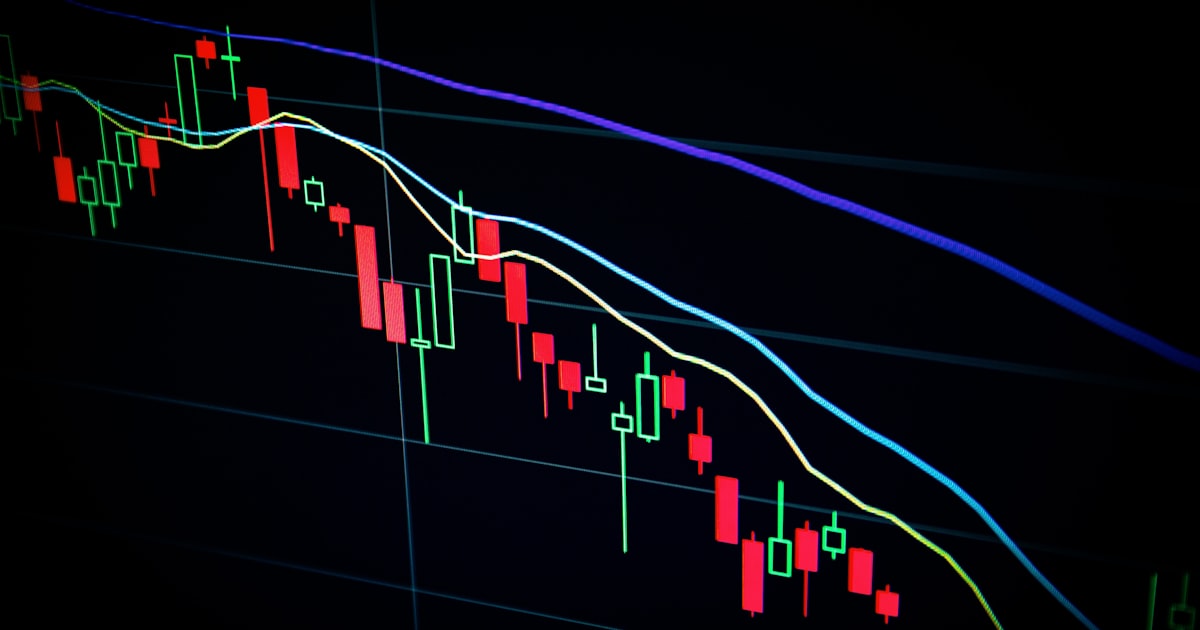
Revenue $119.8B · Cloud +82% · CapEx $195B–$205B · After-hours -4% · Gemini 3.5 Pro delayed · Frozen v2 chip
Summary: On July 22, 2026, Google parent Alphabet (NASDAQ: GOOGL / GOOG) reported Q2 results: revenue of $119.8 billion (+24% YoY), Google Cloud at $24.8 billion (+82%), beating consensus on nearly every line — yet the stock still dropped nearly 4% in after-hours trading. Wall Street focused on the 2026 CapEx guide raised to $195B–$205B, free cash flow turning negative, and a delayed Gemini 3.5 Pro. This breakdown covers the key numbers table, Cloud/Search/YouTube AI metrics, why the stock fell, the CapEx timeline, Frozen v2, Q1 vs Q2 trends, a Q3 watch list, a developer decision matrix, and FAQ. Sources: Alphabet Q2 2026 earnings release, SEC Exhibit 99.1.
| Metric | Q2 2026 | Consensus | Q2 2025 | YoY |
|---|---|---|---|---|
| Total revenue | $119.8B | $116.9B | $96.4B | +24% |
| Diluted EPS | $9.11 | ~$2.88* | $2.31 | +294% |
| Google Cloud | $24.8B | $22.4B | $13.6B | +82% |
| Google Search & other | $63.3B | $63.4B | $54.2B | +17% |
| YouTube ads | $11.1B | — | $9.8B | +13% |
| Total ad revenue | $81.6B | — | — | — |
| Operating income | $40.8B | — | $31.3B | +30% |
| Cloud operating margin | 35.6% | — | 20.7% | +14.9 pp |
| Q2 CapEx | $44.9B | — | $22.5B | +100% |
| Free cash flow | -$5.9B | — | +$5.3B | Turned negative |
| Cloud backlog | $514B | — | ~$464B | +$50B QoQ |
*GAAP EPS of $9.11 includes roughly $99 billion in unrealized gains on equity investments (Anthropic, SpaceX, and others). Excluding one-time items, adjusted EPS was approximately $2.88, still in line with expectations.
Treating EPS $9.11 as run-rate earnings — without stripping the $99B unrealized gain, you overstate quality of earnings
Ignoring CapEx guidance — the market often prices the growth bill before revenue fully catches up
Assuming 82% Cloud growth is the new normal — acceleration came from a lower base plus AI infrastructure land-grab; Q3 comps get harder
Missing the backlog vs FCF divergence — $514B in backlog signals visibility, but Q2 free cash flow was -$5.9B
Decoupling model delays from Cloud momentum — Gemini 3.5 Pro has no ship date, yet Enterprise adoption already reaches nearly 90% of the Fortune 100
Google Cloud revenue hit $24.8 billion, with growth accelerating from +63% in Q1 and +48% in Q4 2025. Operating income reached $8.8 billion (vs $2.8B a year ago), and operating margin expanded to 35.6%. Remaining performance obligations (backlog) climbed to $514 billion, up $50B quarter over quarter — at the current run rate, backlog alone covers more than five years of revenue.
Growth drivers:
CEO Sundar Pichai: “Q2 was an extraordinary quarter. Alphabet revenue grew 24% year over year, and Google Cloud revenue accelerated to 82% growth, driven by demand for AI infrastructure and AI solutions.”
The biggest pre-earnings fear was that AI Overviews and AI Mode would cannibalize search ad clicks. Q2 data pushed back on that narrative:
Pichai said AI search features now drive billions of clicks to websites every week. Query volume is still growing — AI is extending the search experience rather than replacing it.
Alphabet dropped roughly 4% in after-hours trading to ~$327. Three forces dominated the reaction:
| Date | 2026 full-year CapEx guide |
|---|---|
| Early 2026 | $175B – $185B |
| Q1 earnings (April) | $180B – $190B |
| Q2 earnings (July) | $195B – $205B |
Quarterly CapEx hit $44.9 billion, doubling year over year. Management said roughly 60% goes to servers and 40% to data centers and networking. 2027 CapEx will be “significantly higher” than 2026.
Q2 free cash flow was -$5.9 billion (vs +$5.3B in Q2 2025). Revenue set records, but cash burn accelerated faster.
OpenAI shipped GPT-5.6, Anthropic released Claude Fable 5, and xAI launched Grok 4.5 — all in July. Google's flagship model remains in testing with no public date, and that gap unsettled investors.
CFO Anat Ashkenazi pushed back: demand signals are stronger than a year ago, and the company uses a strict ROI framework for investments. The market's shorthand: growth is showing up; the bill just arrived.
Gemini 3.5 Pro was originally targeted for June 2026. It has slipped.
July 2026 competitive context: GPT-5.6, Claude Fable 5, and Grok 4.5 are all live; coding and agent capability is the fiercest battleground. Google's response: Gemini 4 development is underway, with plans to ship new model versions nearly every month; the company also released Gemini 3.5 Flash Cyber for security-focused workloads.
| Attribute | Detail |
|---|---|
| Design philosophy | Embed portions of Gemini model architecture directly in silicon |
| Efficiency gain | Estimated 6–10x better energy efficiency vs existing TPUs (tokens per watt) |
| Scope | Built for Gemini inference (not a general-purpose TPU replacement) |
| Positioning | Complements TPUs; initial production volumes remain small |
| Strategic impact | Lowers Gemini inference cost over time, supporting Cloud margins |
The Information reported Frozen v2 as Google's hardware shortcut while the flagship model catches up. Most TPU system sales revenue is expected to be recognized in 2027, not 2026.
| Investment area | Evidence |
|---|---|
| AI data centers | ~40% of CapEx on facilities and networking |
| AI compute hardware | ~60% of CapEx on servers/TPUs |
| Equity financing (June 2026) | $49.6B stock + preferred issuance |
| Debt financing (Q2) | $20.3B senior unsecured notes |
| Cash reserves | $242.5B (cash + marketable securities) |
| Third-party compute bridge | External capacity in Q3 may pressure Cloud margins near term |
Google is not alone — every hyperscaler is in an AI infrastructure arms race. The open question is whether $200B+/year in spending can generate equivalent AI revenue quickly enough.
| Segment | Q1 2026 YoY | Q2 2026 YoY | Trend |
|---|---|---|---|
| Total revenue | +22% | +24% | Accelerating |
| Google Cloud | +63% | +82% | Sharp acceleration |
| Google Search | +19% | +17% | Slight deceleration |
| YouTube ads | +11% | +13% | Rebound |
| Operating margin | 36% | 34% | Investment pressure |
If you build iOS or agent workflows and are weighing “go all-in on Google's AI stack” versus multi-model routing, use this frame:
| Scenario | Cloud / API path | Local / rented Mac GUI validation |
|---|---|---|
| Gemini API / Antigravity trial | Low barrier to entry | macOS permission dialogs and Keychain need VNC |
| Multi-model agents (OpenClaw routing) | Cloud inference scales | Rented Mac isolates keys and GUI approvals |
| iOS build + AI feature integration | — | Requires macOS; often needs VNC for signing |
| Buy Mac Studio for local inference | Personal CapEx equivalent | $3K+ upfront vs hourly VNCMac rental |
Reconcile Gemini Enterprise / API pricing against your budget model as Cloud expansion continues
Watch the Q3 Gemini 3.5 Pro window — any date announcement can shift agent routing strategy
If your daily driver is not a Mac, use a VNC remote Mac to validate Antigravity / Xcode AI features — SSH cannot click authorization prompts
Compare Cloud TPU rental TCO vs local Apple Silicon inference (see our DeepSeek V4 coverage for a parallel framework)
Follow the CNBC earnings live recap and SEC filing updates
Gemini 3.5 Pro ship date — any announcement can move the stock
Search revenue comps — CFO flagged tougher YoY bases in Q3
Cloud margin trajectory — near-term impact from third-party compute bridging
2027 CapEx guidance — management already warned it will be “significantly higher”
Competitive releases — Kimi K3, GPT-5.6, and Claude Fable 5 all landed in July
Frozen v2 production timeline — any mass-production signal matters
External TPU sales revenue — recognition expected to accelerate in 2027
Revenue $119.8B (+24%), Google Cloud $24.8B (+82%), Q2 CapEx $44.9B, free cash flow -$5.9B, Cloud backlog $514B.
CapEx guide raised to $195B–$205B, free cash flow turned negative, and Gemini 3.5 Pro was delayed — growth delivered, but the bill got bigger. Stock fell ~4% after hours.
Yes. Coding benchmarks missed internal targets, putting the schedule months behind. Partner testing is underway; no public release date yet.
Google's custom Gemini inference chip with architecture embedded in silicon. Estimated 6–10x better energy efficiency vs TPUs; complements general-purpose TPUs.
Q2 Cloud +82% is an unusually sharp acceleration among hyperscalers. The $514B backlog provides strong revenue visibility. Check AWS and Azure Q2 reports for direct comparison.
Alphabet's Q2 2026 sends a dual signal. On the positive side: AI monetization is real (Cloud +82%, Search still growing, Gemini nearing billion-user scale). On the caution side: $200B+ CapEx, negative free cash flow, and a delayed flagship model — the market priced the bill first. For the AI industry, 2026 is the commercialization inflection: the growth story is proven; the ROI story is next.
If your primary machine is Windows or Linux but you need to validate Gemini Antigravity, OpenClaw multi-model routing, and iOS builds during this earnings window, buying a Mac is its own CapEx problem — and SSH cannot handle macOS permission dialogs. Renting a VNCMac remote Mac gives you hourly VNC sessions on an isolated node to compare Cloud API workflows against local agent setups, then stop paying when the sprint ends. See Mac rental pricing to get started.
Last updated: July 23, 2026 | Source: Alphabet Q2 2026 earnings release