Post-keynote platform roundup · Gemini partnership · Golden Gate · device gates · controversies & developer shifts
On June 8, Apple spent roughly 75 minutes at Apple Park delivering the Siri reboot two years in the making—now branded Siri AI, backed by Google Gemini—alongside iOS 27, macOS 27 Golden Gate, iPadOS 27, watchOS 27, and visionOS 27, plus confirmation that Tim Cook hands the CEO role to hardware SVP John Ternus on September 1. Bottom line: WWDC 2026 was structured as “fix performance first, then sell AI”—an admission of lag, but with Snow Leopard–style plumbing and platform-wide AI integration shipped in one keynote. This article covers: Siri AI capabilities plus pricing and regional limits, a cross-platform comparison table, parental controls and mandatory App Intents, the foldable iPhone breadcrumb, post-event controversies, and a five-step VNC remote Mac checklist for developers without local hardware to run Xcode 27 Beta. Pair it with our pre-WWDC preview and iOS 27 upgrade guide.
WWDC 2026 carried two overlapping narratives. First, Tim Cook's last WWDC as CEO—he closed with a North Star mission quote and confirmed the September 1 transition to John Ternus, a hardware engineer successor who signals tighter device-and-silicon coordination ahead. Second, the AI catch-up race: Apple previewed a new Siri in 2024; this year it finally shipped, yet the keynote order told the story—performance and architecture led; Siri AI and Apple Intelligence followed.
Craig Federighi reiterated on stage: "We believe privacy in AI is non-negotiable." Meanwhile, Siri AI reportedly runs on a server-side Gemini model with roughly 1.2 trillion parameters. The tension between that privacy narrative and the Google partnership became one of the week's loudest debates (see Section 07).
Consumer pain: Legacy Siri handled single-turn queries, couldn't read the screen, and weak cross-app context—far behind ChatGPT and Gemini daily drivers.
Developer pain: SiriKit enters deprecation; App Intents is the sole supported integration path, forcing migrations for existing SiriKit work.
Hardware divide: macOS Golden Gate abandons Intel; Siri AI and several AI features carry explicit device and memory gates—including a 12 GB tier for advanced capabilities.
Regional fragmentation: Mainland China gets no Siri AI at launch; EU mobile and watch SKUs miss day-one availability while desktop and Vision Pro do not.
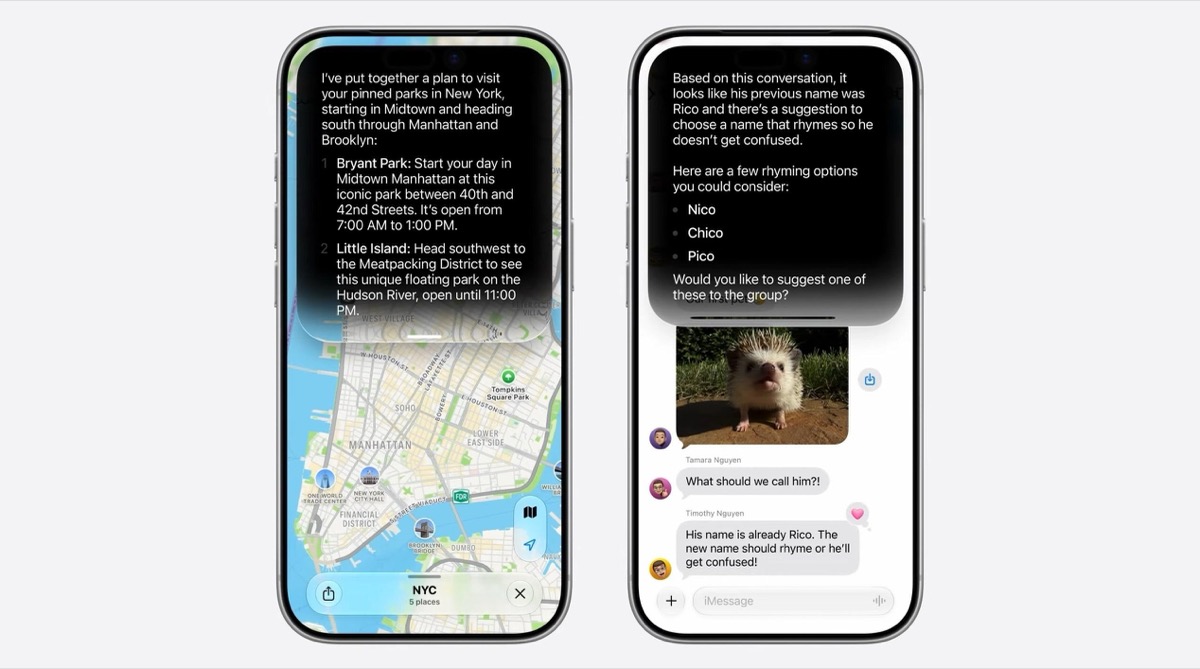
Apple drew a hard line between the new assistant—Siri AI—and legacy Siri. A dedicated app lands on iOS, iPadOS, macOS, and visionOS; watchOS 27 does not ship the Siri AI app at launch and will add it in a later beta. On Mac, conversations start from Spotlight; on iPhone, swipe down from the Dynamic Island.
Core capabilities: multi-turn dialogue and chained requests; onscreen awareness that reads the current UI; cross-app context (e.g., pulling a flight number from Mail mid-call); web search for fresh information; and iCloud-private sync of conversation history across iPhone, iPad, Mac, and Vision Pro. Demo flow: one thread to look up FIFA 2026 schedules, plan a watch party, and suggest dishes from two countries.
| Dimension | Details |
|---|---|
| Underlying model | Google Gemini (reported ~1.2T parameters); deep Apple–Google collaboration |
| Pricing | Free tier with daily allowance; overflow requires iCloud+ for higher usage |
| Minimum iPhone | 15 Pro / 15 Pro Max, all iPhone 16 and 17 models |
| Minimum iPad | iPad mini (A17 Pro) or M1 and newer iPads |
| Minimum Mac | All Apple Silicon (M1+), including MacBook Neo (A18 Pro) |
| 12 GB advanced tier | Custom Siri voice, global dictation—requires 12 GB unified memory; iPhone 17 base (8 GB) excluded |
| Regions | No mainland China; EU skips iOS/iPadOS/watchOS at launch; EU macOS/visionOS supported; 16 languages including Simplified and Traditional Chinese |
It shipped—but gates, geography, and Google dependency mean this is not a Siri everyone can use on day one.
iOS 27 supports iPhone 11 and later—the same floor as iOS 26— which Apple calls its broadest compatibility yet. But Siri AI / Apple Intelligence still map to the device table above: installing the OS does not guarantee AI access.
Performance (among the most substantive updates): after scheduler and low-level rewrites, Apple cites up to 30% faster app launches; up to 70% faster camera-to-Photos handoff; up to 80% faster AirDrop; up to 5× faster external storage browsing; rebuilt Spotlight, Mail, and Photos search with near-instant indexing for new files.
Design: Liquid Glass gains a transparency slider (ultra-clear to opaque) responding to last year's backlash; icon edges sharpen without abandoning the language. Other highlights: Camera Siri Mode, cross-app auto-proofreading, Write with Siri, natural-language Shortcut creation; Safari AI tab groups and one-tap weak-password fixes; Photos Extend / Enhance / Reframe / Clean Up upgrades; Image Playground local photorealistic generation; Wallet "Create a Pass" to digitize physical cards; AirPods' first Custom EQ, and more.
macOS 27 is codenamed Golden Gate, explicitly compared to Mac OS X Snow Leopard (2009)—mostly plumbing and speed. The headline hardware change: Apple Silicon only; all Intel Macs are dropped.
Siri AI integration: embedded in Spotlight (search and ask, query selected files); system-wide right-click entry points; multi-select presentations for Siri to compare and recommend; Visual Intelligence on Mac via screenshot selection. Design: unified window corners, edge-to-edge sidebars, more transparent menu bar, color sidebar icons return, transparency slider parity with iOS, and a slimmer menu-bar icon set.
Intel Mac owners can stay on older macOS releases but will not receive Golden Gate or the full Apple Intelligence stack—consistent with our pre-WWDC preview. 2026 marks the end of Intel in Apple's OS narrative.
| Platform | Compatibility & highlights |
|---|---|
| iPadOS 27 | Minimum A14 or M1 (stricter than iOS); one-third / quarter split view; resizable iPhone app windows; optional persistent Menu Bar; inherits iOS 27 AI and search rebuild |
| watchOS 27 | Major cull: Series 9/10/11, Ultra 2/3, SE 3 only; Walkie-Talkie removed; dynamic app grid with five Siri recommendation slots; Smart Stack gestures; Find My integration; Siri AI arrives in a later beta |
| visionOS 27 | First full Apple Intelligence release; spatialized Siri AI windows; panoramas to spatial environments; 3× Wi‑Fi speed claims; spatial Safari and requestImmersive JS API; Spatial Preview and Foveated Streaming (CloudXR) frameworks |
| tvOS 27 | Light keynote detail; fall release confirmed—more in engineer sessions through June 12 |
Trust and safety consumed significant keynote time: child accounts with age-appropriate defaults; Ask to Browse / Ask to Buy; daily limits and schedules for entertainment, games, and social apps; Communication Safety adds graphic violence interventions (under-18 default); redesigned Screen Time UI plus a new parent education site.
Developer-facing changes (summary):
| Change | What it means |
|---|---|
| App Intents | Mandatory—the only supported Siri and app integration path |
| SiriKit | Deprecation path; migrate existing integrations |
| Xcode 27 | On-device AI code completion; foldable layout APIs (foldable iPhone hint) |
| Foundation Models | Open source with agentic primitives; available on watchOS |
| visionOS | Spatial Preview, Foveated Streaming (built-in CloudXR) |
Foldable iPhone breadcrumb: iOS 27 developer beta surfaces foldState, angleDegrees, and related fields; Xcode 27 foldable adaptive APIs are confirmed though Apple announced no hardware—rumors point to a September 2026 event (Ternus' first iPhone cycle).
Release timeline: developer betas opened June 8 (keynote day); public beta expected July; release builds fall 2026; Siri AI GA in English at launch with other languages rolling out afterward.
Five debates worth tracking: (1) Did Siri AI actually catch up—given English-first beta and Google dependency? (2) Does cloud Gemini square with privacy promises? (3) Is excluding two advanced AI features on the 8 GB iPhone 17 fair? (4) Does a Liquid Glass transparency slider count as walking back last year's design? (5) Is the Intel Mac era officially over?
Five steps for developers without a local Mac (VNC graphical session):
Rent an Apple Silicon remote Mac (M1 or newer)—Intel hardware cannot install Golden Gate.
Over VNC, install macOS 27 / Xcode 27 Beta via Software Update or Apple Developer channels; complete Keychain and account authorization prompts.
Spin up a sample project and validate App Intents plus Foundation Models call paths.
Exercise iOS 27 APIs on device or Simulator; graphically verify signing in Organizer before upload.
Keep rollback snapshots or dual-node coverage—see our pre-WWDC Beta freeze and rollback checklist.
Quotable figures: ~75-minute keynote; Cook transition September 1; iOS 27 launch up to 30% faster; external storage browsing up to 5×; visionOS Wi‑Fi 3× claims; watchOS 27 drops Series 6–8 and first-gen Ultra / SE 2.
Compare predictions against what actually shipped.
Read →Device-by-device: is your iPhone worth upgrading?
Read →Freeze environments and roll back—bridges into post-keynote flashing.
Read →Apple rebranded the new assistant as Siri AI, powered by Gemini. It supports multi-turn dialogue, onscreen awareness, cross-app context, and web search in a dedicated app; legacy Siri will be phased out.
No—Apple confirmed mainland China will not launch Siri AI while regulatory approval is pending. In the EU, iOS/iPadOS/watchOS skip launch-day availability; macOS and visionOS are supported.
No. Golden Gate is Apple Silicon only—the official end of Intel Macs on Apple's current OS line.
June 8, 2026—developer betas for all platforms opened keynote day. Public beta is expected in July; release versions ship in fall.
WWDC 2026 was a make-up delivery: Siri AI finally landed, and the Snow Leopard–style performance work is genuinely substantive. Yet Google models, regional gaps, 12 GB feature tiers, and Intel's exit show Apple still balancing ecosystem control, privacy messaging, and hardware monetization. Cook's farewell sets the stage for the Ternus era—foldable APIs and a hardware-first CEO make the fall iPhone event worth watching.
For developers, the real cost is not reading recaps—it is having Apple Silicon plus a graphical session to run Xcode 27, migrate App Intents, and roll back betas safely. Intel laptops, SSH-only cloud hosts, and Windows-primary workflows struggle to cover Keychain prompts, Organizer signing, and system beta installs end to end.
If you want acceptance done before public beta without risking your daily Mac, rent an M-series machine through VNCMac: use the primary button for the purchase page, skim plans on the home page, and follow the SSH-VNC connection guides in our help docs.